Reading your BAL rating without a building surveyor
BAL ratings decide what your house is built from and part of what you pay to insure it. How to work out yours, and the six actions that move it.
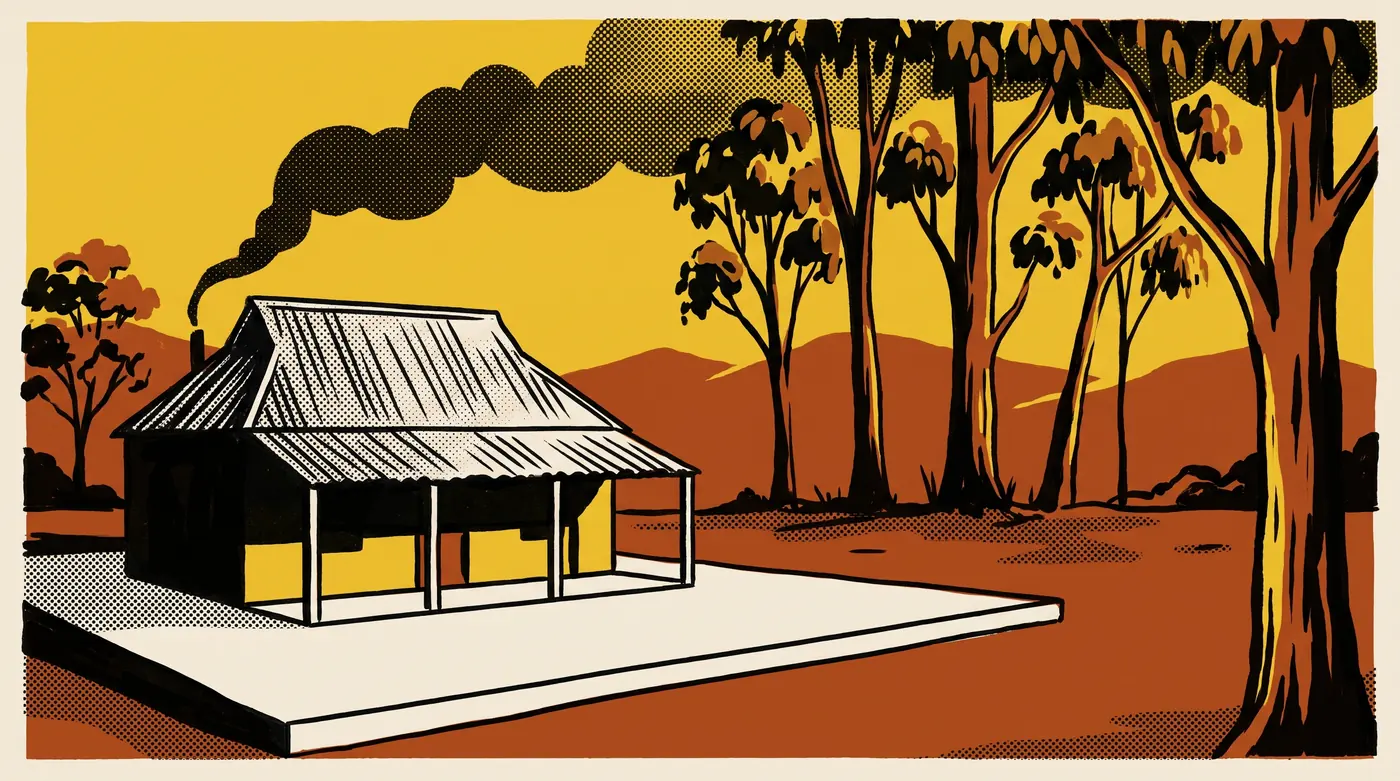
Bushfire Attack Level is the number that decides what your house has to be built from, what a renovation will cost you, and a meaningful share of what you pay to insure it. Almost nobody who owns a house in a bushfire-prone area knows theirs, because it is usually calculated once, by a consultant, at the development application stage, and then filed.
You can work out roughly where you sit in about twenty minutes with a tape measure and a reasonable understanding of what is growing around you. Here is how.
What BAL actually measures
BAL is a measure of the radiant heat a building is likely to be exposed to during a bushfire, expressed in kilowatts per square metre, plus an assessment of the likely ember and direct flame exposure that comes with it. The bands used across Australia are BAL-LOW, BAL-12.5, BAL-19, BAL-29, BAL-40 and BAL-FZ, the flame zone.
Three inputs drive it:
- Vegetation classification. Forest, woodland, scrub, mallee, rainforest, grassland. Forest is the worst and grassland is the mildest, and the difference between them at the same distance is often two whole bands.
- Distance from the vegetation to the building. Measured to the nearest external wall, not to the boundary and not to the middle of the house.
- Effective slope under the vegetation. Fire runs uphill. A downslope of ten degrees below the classified vegetation is dramatically worse than flat ground, because it lengthens the flame and shortens your separation.
Doing the rough version yourself
Stand at the wall of your house that faces the largest continuous patch of vegetation. Measure to the edge of it. Then classify what is in it honestly: a strip of six gums along a fence line is not forest, but two hectares of unmanaged bush behind the back fence is. Then look at whether the ground falls away under that vegetation, and by roughly how much.
At the same distance from the same vegetation, a downslope of more than five degrees typically costs you one band. Under a forest classification, twenty metres of separation on flat ground is usually around BAL-29. The same twenty metres on a ten degree downslope is usually BAL-40. That is the difference between a manageable retrofit and a very expensive one.
This is an estimate, not a certificate. A formal BAL assessment costs a few hundred dollars from an accredited assessor, and if you are renovating, extending, or arguing with an insurer about a rating, get one. What the rough version is good for is knowing whether you are in the conversation at all.
The thing the rating does not tell you
Radiant heat is what BAL measures, and radiant heat is not what destroys most Australian houses in a bushfire. Ember attack is. Embers arrive before the front and keep arriving after it, and they get in through the boring parts of a building: a gutter full of eucalypt leaves, an unscreened subfloor vent, a gap where the roof sheeting meets the fascia, a doormat, a woodpile stacked against the wall because that is where the woodpile has always gone.
A house at BAL-19 with clean gutters, screened vents and a five metre non-combustible zone is a better risk than a house at BAL-12.5 with a timber deck, a full gutter and the mulch beds right up against the cladding.
That is not us being generous. It is what the loss data says, and it is why our rating model weights maintenance and detailing alongside the formal band.
What is worth doing, in order
- Gutters and valleys. Cleaned every spring, with guards fitted. Cheapest action on this list and the one that most often decides the outcome.
- Vents and weep holes. Metal mesh no coarser than 2mm on every subfloor vent, roof vent and weep hole. A morning with a staple gun.
- The five metre zone. No mulch, no woodpile, no gas bottles, no shade sail, no stored timber within five metres of any wall. Gravel, paving or mown grass instead.
- Decking. Timber decking within six metres of the house replaced with a non-combustible product, or the underside fully enclosed with fibre cement sheet.
- Windows on the exposed elevations. Toughened glass in a metal frame, with metal flyscreens. This is the expensive one and it is worth doing last, but at BAL-29 and above it is what the standard requires anyway.
- Water. A static supply with a fitting the local brigade can actually connect to, and a pump that does not need mains power to run.
What it does to the premium
A verified drop of one BAL band typically moves a Wattle home premium by 8 to 14 per cent, and the rating stays with the property when you sell it. Documented ember mitigation without a band change is worth less, but it is not worth nothing, and it is the half of the list you can do with a ladder rather than a builder.
Send us the invoices and the photographs and we recalculate at your next renewal. Use whatever contractor you like. We take no commission from anybody, which is the only sensible way to run a programme that asks people to spend money.
If you want the version specific to your address rather than the general version, ask for a property risk report. It is free, it is six pages, and you get it whether or not you ever buy a policy from us.
General advice only. This article is general information prepared without taking into account your objectives, financial situation or needs. Consider the PDS and TMD before deciding on any product, and get advice about your own property from a qualified professional. Wattle Insurance is a fictional brand and this is a demonstration site.