What hail actually does to a roof, and what we pay for
Bruised tiles, dented Colorbond, cracked solar glass and the whirlybird nobody checks. A field guide to the damage assessors find and the damage they do not.
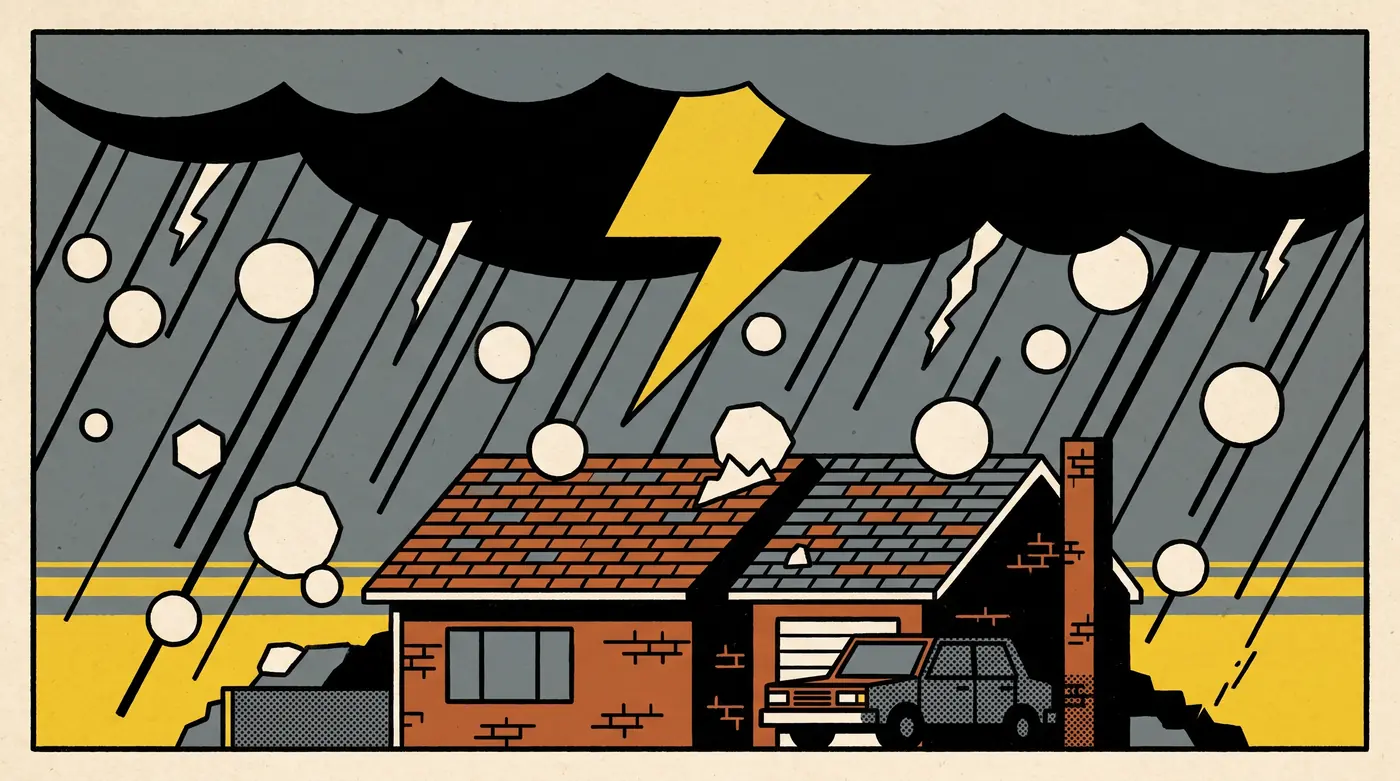
Hail is the most frequent large-loss event in Australia and the one people underestimate most consistently, because a hailstorm almost never destroys a house. It puts holes in it. Then rain does the expensive part over the following fortnight, usually while the owner is still waiting on a roofer.
This is what assessors actually find, in the order they find it, and where the arguments happen.
Tiles: the bruise you cannot see from the ground
A concrete or terracotta tile struck hard enough will fracture without visibly breaking. The surface glaze or the top few millimetres of concrete crazes, the tile keeps its shape, and it looks completely normal from the driveway. Water starts getting through weeks later, and the ceiling stain that appears in June is from the storm in December.
An assessor finds these by chalk-testing a sample area and by looking at the underside from inside the roof cavity, where a fracture shows as a damp shadow. This is the single most common reason a hail assessment takes longer than an owner expects, and it is also why we would rather send somebody up than settle from a photograph.
Metal roofing: dents are not always damage
Colorbond and zincalume sheeting dents. A dent that has not fractured the coating and does not pond water is cosmetic, and cosmetic damage to metal roofing is one of the genuinely contested areas in Australian claims.
The test we apply is functional: has the coating been broken, is water ponding, has the sheet been deformed enough to compromise the fixings or the fall.
If the answer to all three is no, we will say so and we will explain why, rather than paying for a reroof that changes nothing. If the answer to any of them is yes, the sheet is replaced. Where replacement means the new sheeting will not match the old, we replace the whole plane rather than patching a visible elevation.
Whirlybirds: the thing nobody checks
If we could get every Australian household to do one thing before the storm season, it would be this. A spinning turbine vent is the most common water entry point we see after hail, and it fails in two ways. Hail bends the vanes so the head no longer spins true and the throat sits open. Or the wind that came with the hail lifts the whole head off a flashing that was only ever silicone-sealed.
Sealed ridge vents do the same ventilation job with no moving parts and no throat. They cost about the same to fit. Replacing spinning turbines with sealed vents is on our mitigation list for a reason.
Solar: glass, and the thing under the glass
Solar panel glass is toughened and it usually survives. What does not survive is the cell layer underneath, which can micro-crack from the impact without the glass showing a mark. Output drops by a few per cent, then keeps dropping.
If you have solar and you have been through hail, pull your inverter output data for the fortnight either side of the event and send it with the claim. A per-string output drop is the cleanest evidence there is, and it turns a difficult claim into an easy one. Panels are covered under the building section as a fixture, not under contents.
What is not covered, and why
- Pre-existing damage. If the roof was already failing, the storm did not cause that. This is why we ask people to photograph their roof once a year, and why an owner with before pictures almost never has this argument.
- Gradual water damage from a fault you knew about. The leak you have been meaning to get to is not a storm claim.
- Wear on the flashings and seals. The storm that finally pushed a twenty-year-old silicone bead past its limit did not cause the twenty years.
- Loss of value after a repair. No Australian home policy pays diminution in value, and any policy that appears to is doing something else.
One event, one excess
Worth saying plainly because people frequently get this wrong. If a single storm damages your roof, ruins your ceilings and dents both cars in the driveway, that is one event. On a Wattle policy you pay one excess, the highest single one that applies, not a building excess plus a contents excess plus two motor excesses.
That is only true where the vehicles are on a Wattle motor policy as well. If your house is with us and your car is elsewhere, you are paying two insurers two excesses, which is one of the few genuinely good reasons to put them together.
Before the next one
- Replace spinning whirlybirds with sealed vents.
- Have the ridge capping re-bedded and re-pointed if it is over ten years old.
- Fit gutter guard sized for the leaf litter you actually have.
- Crown-thin the limbs within a fall radius of the roof and the driveway.
- Photograph the roof, dated, once a year. Ladder or drone, either is fine.
- Park under cover. Hail totals more vehicles per event than any other peril in this country.
Sealed vents, re-bedded ridge capping and documented annual roof checks reduce a Wattle home premium by 5 to 9 per cent in the hail belt. More on that in the storm and hail section of the resilience programme, and the full position on damage cover is on the home and contents page.
General advice only. This article is general information prepared without taking into account your objectives, financial situation or needs. Consider the PDS and TMD before deciding on any product, and get advice about your own property from a qualified professional. Wattle Insurance is a fictional brand and this is a demonstration site.